


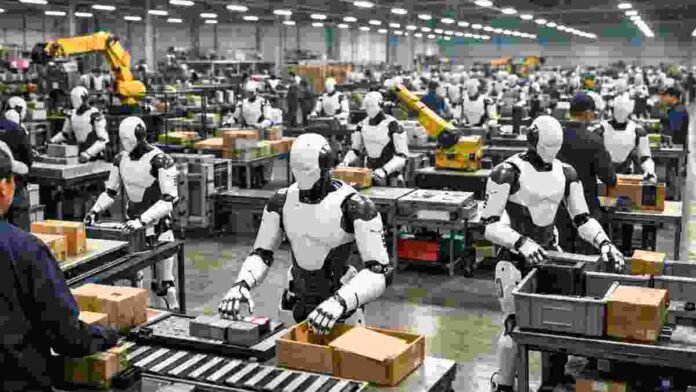
The industrial “show” has been running for two years. Chinese humanoid robot makers have showcased their capabilities by presenting video clips of robots that breakdance punch run marathons and even entertain a martial arts display to stakeholders. The show has worked. Huigong (a leading domestic humanoid robot producer) and others have received investment, international coverage has increased, and Chinese humanoid robot shipments now dominate the worldwide market.
The pressing question posed this week in Beijing is whether Chinese humanoid robots will ever be able to perform work that is worth employing them. More than 300 firms and 2,000 displays kicked off the World Robot Conference. New products are still being introduced, and in the last part of the month the World Humanoid Robot Games will combine dazzling contests withworkaday chores.
Realtime event organizers and contestants know that the focus is changing. Investors and buyers now demand more than movies showinghow it looks. They want to know how well a robot performs during a complete workday, how much human guidance is necessary, and how long it takes to recoup their investment. Cost continues to be one of the major hurdles. It is suggested that a typical industrial humanoid with a 2 year payback time, counting maintenance into the equation, should not be more than 160,000 yuan compared to the cost of employment for an average manufacturing worker. Though many of the showcased units still cost between 300,000 and 500,000 yuan, which will hinder proliferation in the general field of production outside of control or heavily subsidized pilot projects.
A few companies have started to venture out of the lab. Robots have successfully run multi-day factory cycles, sorting product and delivering materials in a tightly controlled environment. Others have begun to experiment with small forays into their logistics operations, clothing factories and electronics assembly plants. The important thing about these test runs is that they give us much-needed field data that no existing system can yet provide.
‘Field testing’ yet is a very different concern from deploying thousands of automated workers alongside human workers. Policy encouragement has set China’s ambitions highplacing more than ten thousand humanoid robots into commercial service by 2026. Policy support, a dense supply chain and rapid iteration have given Chinese players a clear volume advantage, but the more difficult challenge will be how those volumes translate into lasting economic valuereliable operation in a complex environment, low electricity and maintenance requirements, smooth adaptability to unpredictable conditions and avoiding the need for a guide staff, will determine which players thrive in the transition from demonstration darling to industrial workhorse.
The industry is not frozen. Hardware keeps on getting better and cheaper. Software, trained on larger and larger sets of physical data, is booming. A handful of players already tell you that they generate noticable revenue, and that they are only earning modest (but not insignificant) profit. But a large divide remains: A robot that can entertain a whole auditorium is still far away from a robot that can replace or support a manual worker seamlessly for the duration of an 8-hour shift. This week’s shows in Beijing tell you just how wide that divide is.

Online Magazine News is your go-to source for the latest trends, insights, and updates across a wide range of topics, including technology, lifestyle, entertainment, and business. With a commitment to delivering accurate and engaging content, Online Magazine News keeps readers informed and inspired in the ever-evolving digital world.


